



Monkeys in Mythology, Folklore, and Religion
By Anniina Jokinen.
This essay is permalinked at Luminarium.

I have received a constant "Sign of the Monkey" in the past few weeks (See previous post), so I thought I'd do my research. Here are my gatherings so far. Any and all additions and helpful suggestions appreciated.
Monkey lore in India dates from before 500 BC.1 One of the most popular Hindu gods is Hanuman the Monkey, in some tales said to be an incarnation of Shiva. He is revered for his bravery, strength, loyalty, devotion, and dedication to justice. His tale and heroic exploits are told in both the Ramayana and the Mahabharata. It is common to chant the name of Hanuman when one needs heavenly intervention. Every year, his birthday is celebrated "on the full-moon day of Chaitra (April) at sunrise."2 Monkeys in general are revered in several parts of India, for bearing the likeness of Hanuman. He is connected to the sun, the wind, and thunder.
Monkey lore in China predates Buddhism, for the Monkey appears in the Chinese Zodiacal beliefs, believed by scholars to date to around 1100BC. In some parts of China, the Monkey (申) is worshipped as the "Great Sage Equal to Heaven."3 Of interest is also that the rough Western equivalent for the Chinese astrological sign of Monkey is the sign of Leo (which I am). In Chinese mythology, the monkey god was Sun-Wukong, the Monkey King, a trickster god. He is the hero of the 16th-century Chinese book Journey To The West (Xiyou Ji).4 The Monkey God Festival is still celebrated in China and Hong Kong.
Monkey lore in Japan took hold after the arrival of Buddhism (mid-6th century AD) and is tied to Japanese Shinto-Buddhism.5 The monkey was alternately a messenger to the gods or a physical manifestation of a god. The origin of the three monkeys, "Speak No Evil, Hear No Evil, See No Evil," is also thought to have originated at the Hiei Shrine at Mt. Hiei.6 In folklore and geomancy beliefs, the Monkey was thought to protect against demons as well as disease and is a patron of fertility, safe childbirth, and harmonious marriages.
Before moving away from the Far East, I'd like to quote Shumacher's summary of the monkey gods:
In the Americas, the Mayans of Guatemala and Mexico worshiped a howler monkey god ( sometimes depicted as twin-gods), who was the patron of the arts; music, scribes and sculptors.8 In the Mayan Calendar, the Howler Monkey corresponds to knowledge of history and rituals, as well as prophecy.9 There is a fabled "Ciudad Blanca" in Honduras, dedicated to the Monkey God, but so far its location is unknown—it is mentioned in pre-Columbian Toltec and Maya texts as "The ancient place where the aurora originates."10 In Aztec mythology of Mexico, the monkey was connected to the sun, and was guarded by Cochipilli (Kokopelli), the god of flower, fun, and fertility.
I was unable to find out anything about monkey beliefs in Africa. It is quite hard to imagine that a whole continent filled with monkeys would yield no monkey beliefs? Perhaps this just goes to show how disinterested the western world is in Africa in this as well as other areas. Please contribute if you possess any monkey information relating to Africa.
To wit, I don't quite know what to do with all of this. What is the universe trying to tell me? To stop being restless, to stop being fooled by appearances, and to devote myself to meditation and the seeking of wisdom? Does anybody have any ideas here?
1 Monkey Deities. Mark Shumacher.
2 Hanuman, Simian symbol of strength. About.com
3 Monkey (Zodiac). Wikipedia entry.
4 Monkey. "Chinese Mythology." Godchecker.com.
5 Shumacher.
6 Ibid.
7 Ibid.
8 Howler Monkey Gods. Wikipedia entry.
9 Ibid.
10 Madrid, Ricardo. "White City legend has curious history."
Honduras This Week. 4 Sep 2001. 8 Mar 2007.
This essay is permalinked at Luminarium.
I have received a constant "Sign of the Monkey" in the past few weeks (See previous post), so I thought I'd do my research. Here are my gatherings so far. Any and all additions and helpful suggestions appreciated.
Monkey lore in India dates from before 500 BC.1 One of the most popular Hindu gods is Hanuman the Monkey, in some tales said to be an incarnation of Shiva. He is revered for his bravery, strength, loyalty, devotion, and dedication to justice. His tale and heroic exploits are told in both the Ramayana and the Mahabharata. It is common to chant the name of Hanuman when one needs heavenly intervention. Every year, his birthday is celebrated "on the full-moon day of Chaitra (April) at sunrise."2 Monkeys in general are revered in several parts of India, for bearing the likeness of Hanuman. He is connected to the sun, the wind, and thunder.
Monkey lore in China predates Buddhism, for the Monkey appears in the Chinese Zodiacal beliefs, believed by scholars to date to around 1100BC. In some parts of China, the Monkey (申) is worshipped as the "Great Sage Equal to Heaven."3 Of interest is also that the rough Western equivalent for the Chinese astrological sign of Monkey is the sign of Leo (which I am). In Chinese mythology, the monkey god was Sun-Wukong, the Monkey King, a trickster god. He is the hero of the 16th-century Chinese book Journey To The West (Xiyou Ji).4 The Monkey God Festival is still celebrated in China and Hong Kong.
Monkey lore in Japan took hold after the arrival of Buddhism (mid-6th century AD) and is tied to Japanese Shinto-Buddhism.5 The monkey was alternately a messenger to the gods or a physical manifestation of a god. The origin of the three monkeys, "Speak No Evil, Hear No Evil, See No Evil," is also thought to have originated at the Hiei Shrine at Mt. Hiei.6 In folklore and geomancy beliefs, the Monkey was thought to protect against demons as well as disease and is a patron of fertility, safe childbirth, and harmonious marriages.
Before moving away from the Far East, I'd like to quote Shumacher's summary of the monkey gods:
| Monkey mythology is an important part of both Hindu / Buddhist lore (India) and Zodiac / Taoist / Buddhist lore (China). In the various tales... the monkey is portrayed initially as foolish, vain, and mischievous. Yet, in each tradition, the monkey learns valuable lessons along the way, makes changes, and eventually gains redemption. The monkey thus embodies the themes of repentance, responsibility, devotion, and the promise of salvation to all who sincerely seek it.7 |
In the Americas, the Mayans of Guatemala and Mexico worshiped a howler monkey god ( sometimes depicted as twin-gods), who was the patron of the arts; music, scribes and sculptors.8 In the Mayan Calendar, the Howler Monkey corresponds to knowledge of history and rituals, as well as prophecy.9 There is a fabled "Ciudad Blanca" in Honduras, dedicated to the Monkey God, but so far its location is unknown—it is mentioned in pre-Columbian Toltec and Maya texts as "The ancient place where the aurora originates."10 In Aztec mythology of Mexico, the monkey was connected to the sun, and was guarded by Cochipilli (Kokopelli), the god of flower, fun, and fertility.
I was unable to find out anything about monkey beliefs in Africa. It is quite hard to imagine that a whole continent filled with monkeys would yield no monkey beliefs? Perhaps this just goes to show how disinterested the western world is in Africa in this as well as other areas. Please contribute if you possess any monkey information relating to Africa.
To wit, I don't quite know what to do with all of this. What is the universe trying to tell me? To stop being restless, to stop being fooled by appearances, and to devote myself to meditation and the seeking of wisdom? Does anybody have any ideas here?
1 Monkey Deities. Mark Shumacher.
2 Hanuman, Simian symbol of strength. About.com
3 Monkey (Zodiac). Wikipedia entry.
4 Monkey. "Chinese Mythology." Godchecker.com.
5 Shumacher.
6 Ibid.
7 Ibid.
8 Howler Monkey Gods. Wikipedia entry.
9 Ibid.
10 Madrid, Ricardo. "White City legend has curious history."
Honduras This Week. 4 Sep 2001. 8 Mar 2007.
Labels: Everything's coming up Monkeys, folklore, mythology
posted by Anniina | 5:43 PM
|
10 comments


 The Lapps believed these fires to have magical effects; Lappish shaman drums often had runes depicting the fires to harness their energy. The lights were believed to have a mellowing effect on arguments, and the time of the fires was beneficial to conflict resolution. The Lapps also had a belief that if you whistled under the Northern Lights, you could summon them closer, and they could whisk you away with them.
 Over the last few years, due to Luminarium and my name being so obviously Finnish, I've received repeated requests from Finns, or people whose ancestry is Finnish, for translations of Finnish poetry into English. Not enough has been done, or published, in my opinion. The main reason may well be, that translating from the Finnish is a *insert any favorite expletive*.
 Pagan rites are still alive and well in Finland. Tonight will be Midsummer's Eve, a night on which young women traditionally perform Midsummer spells. The object of spells performed on this night is to find a sweetheart or a husband, or to make the heart's desired return one's feelings. Other spells are reserved for other festivals, such as spells for financial prosperity or finding out about the future, which are performed on New Year's Eve night. These spells all have their variations, depending on the geographical area of Finland — for example, the number of flowers and herbs may be different, or how many times a particular step is performed, but the objective is the same — mating, mating, mating.
 As you see, most all of these spells involve the young maidens rolling, sweeping, or running around naked. Aren't ye sorry you're not in Finland tonight, boys?


 Mark quotes J. W. DeForest who defined the would-be-GAN as "the picture of the ordinary emotions and manners of American existence" (The Nation, 1868). Mark astutely points out that such an ideal cannot be sustained, since literature is static — one can capture an impression of a nation's psyche in the moment the novel is written, but as society keeps changing, any description soon becomes outdated. Citing Huck Finn and Moby Dick as examples, Mark illustrates how these books have turned almost into museum pieces — they are works that capture the zeitgeist, to use Mark's word, of a specific time period, but which to a modern reader seem far removed.
 The story of the Joad family's exodus from the Oklahoma Dust Bowl in the 1920's to the 'promised land' of California. Steinbeck is a master of describing both the inner and outer workings affecting people's lives. Rife with social commentary that still resonates today, engaging characters, deft symbolism, and passages of divine eloquence, not the least of which is Tom's last speech to Ma. This is one of the staples of American lit, and one that deserves its place in university curriculi.
 On the face of it, the tale of a man's obsession with nubile girls, the story transcends its subject matter. Nabokov's prose is rich, his narrator magnetic, the psychological portrayals so multifaceted and deep that the characters breathe themselves to life off the page. Rich in language and so enwrapt in symbolism that unlocking it all on a first read is not possible — yet this is not a "Ulysses" by Joyce; not a book that is at all a difficult read, and enjoyable even on a surface level. It is telling of Nabokov's mastery of storytelling, that by the end of the book the reader can understand the narrator's psyche and emotional world to the point of feeling grief and tragedy, and a brush with the sublime on the final pages, for a fictional character that on a very basic level is a human monster.
  The story of an ex-slave mother, her family past and present, and the ghosts that haunt. It is the story of one particular "Beloved", and all the beloveds who were the casualties of slavery, of man's cruelty to man. This novel, in my opinion, is nearly flawless. Morrison writes with such an inspired voice, everything is superbly crafted without seeming so, the language in both prose and dialogue is almost tactile, sensory. The story is eerie and grounded at once, the characters unforgettable, this is a novel the reader will carry in active memory for a long time and will never be able to forget. Please do not ever watch the horrid movie made of this book.
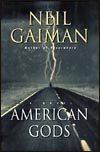 Academia still for the most part eschews and belittles the genre of Science Fiction. This is a grave injustice to a genre that I would call the Great American Genre of the 20th Century. I think I shall do a whole post on that topic very soon. Back to the novel at hand. American Gods is an absolutely ingenious story of the gods of various cultures who arrived to this continent with their respective immigrant cultures, but who over time grew forgotten, and now can barely eke out an existence. New gods, the gods of Internet and Credit Card and so on, have arisen, and a war is coming between the ancient and the modern gods. Told from the point of view of Shadow, a mortal caught in the midst of it all, the book is inspired. Gaiman writes prose that is electric and sinuous, weaving in mythology and folklore, while keeping the story very visceral. This is a book that I think comes very close to the parameters of a GAN — it covers so many time periods and so many cultures' deities, that it is fictionally representative of much of what it means to be an American. It is also written with delectable references to literature past. My favorite part of the book has to be when the main character asks one of the Norse god Odin's ravens: